About Industrial Compression Load Cell
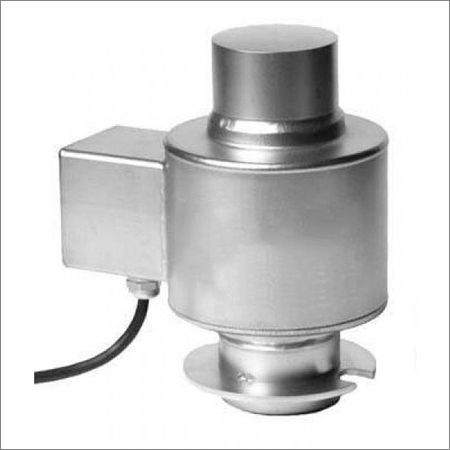
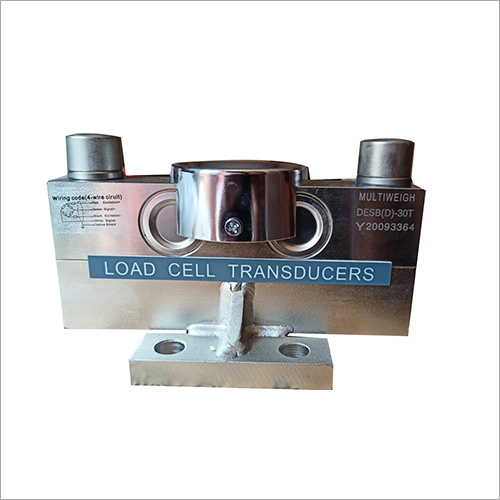
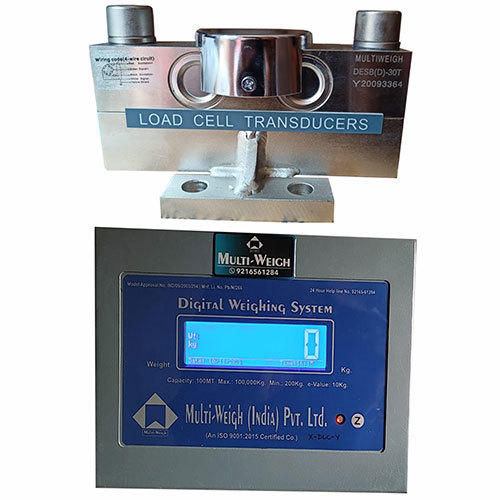
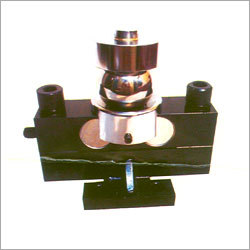
Over the years of dedication, we have been a renowned manufacturer of Industrial Compression Load Cell in the market. It is commonly used to measure weight in an industrial environment. Industrial Compression Load Cell can be installed on reactors, hoppers, etc., to control their weight capacity, which is often of critical importance for an industrial process.
Unmatched Durability and ProtectionFabricated from premium alloy steel and finished with electroplating, this load cell is designed to withstand corrosive and rugged environments. Its IP67 protection class ensures complete resistance to water and dust ingress, making it dependable for both indoor and outdoor use. 150% overload capacity guarantees continued performance and safety even under temporary excessive loads.
Precision Measurement for Critical ApplicationsEmploying resistance strain gauge theory, the load cell achieves a remarkable accuracy of 0.03% of full scale. The stability and reliability of its analog signal output (1.53 mV/V) provide trusted force measurements necessary in manufacturing, material testing, and structural monitoring. Operating effectively across a broad temperature range, it ensures consistency wherever precision is vital.
FAQs of Industrial Compression Load Cell:
Q: How do I install the Industrial Compression Load Cell for optimal performance?
A: To install the load cell, mount it securely on a stable base using the base mount design. Connect the four-wire cable to your measuring device, ensuring correct wiring as per the datasheet. Calibrate the system before usage to ensure accuracy. Follow recommended operating voltage (10 VDC) and temperature ranges.
Q: What benefits does the alloy steel construction and IP67 protection provide?
A: Alloy steel construction delivers high strength and resistance to wear and corrosion, enhancing longevity. The IP67 rating ensures the load cell operates reliably in dusty or wet environments by preventing ingress of water and particles, ideal for harsh industrial conditions.
Q: When should the overload capacity be taken into consideration?
A: Overload capacity becomes critical when temporary forces may exceed the rated capacity. This load cell tolerates up to 150% of its full scale without permanent damage, protecting your equipment and maintaining measurement integrity during unexpected overloads or shock loads.
Q: Where can this load cell be used for industrial applications?
A: This load cell is suited for a broad range of industrial applications including material compression testing, weighing systems, structural monitoring, and heavy machinery. Its robust build and versatile operating conditions make it applicable in manufacturing plants, construction, and research facilities.
Q: What process does the load cell use for force measurement?
A: The load cell utilizes the resistance strain gauge principle, where applied force causes deformation in its metal body, resulting in a measurable electrical signal change. This analog output (1.53 mV/V) is then processed by external instrumentation to determine the load value with high precision.
Q: How does the compensated temperature range enhance measurement reliability?
A: With a compensated temperature range of -10C to +40C, the load cell maintains consistent measurement accuracy despite ambient temperature changes, minimizing errors due to thermal expansion or contraction and ensuring dependability across different operating environments.

 Send Inquiry



 Send Inquiry


 Send Inquiry


